Teaching with Climate change: Hope as capacity of  multiple ways of knowing

Teaching with Climate change: Hope as capacity of  multiple ways of knowing

By Andreea Gatman, Act On Learning

Teaching with Climate change: Hope as capacity of multiple ways of knowing

{

“A lack of hope is stealing young people’s right to imagine futures” (Paulo Freire, Pedagogy of the Heart) 

“Give young people, space for their voice.” (Abigael Kima African Youth caravan representative, COP28, Dec 2023)

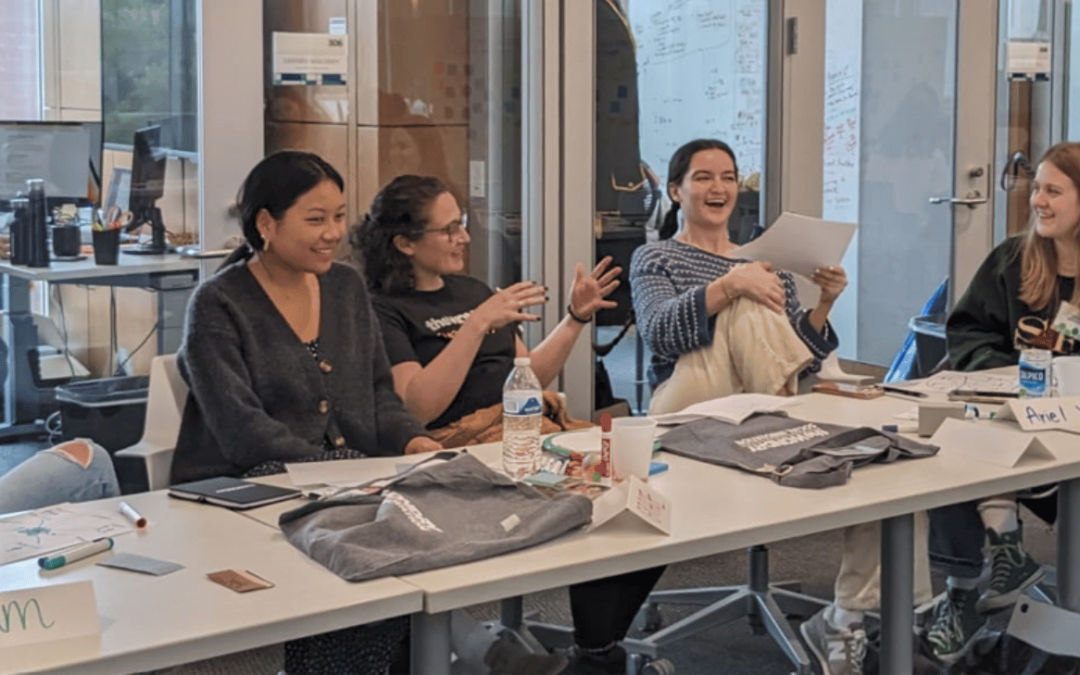
We invited students’ team leaders at Wond’ry Center for Innovation, to future(s) anticipation. As we had one toolkit called “hope cards” we approached what Karen O’Brien, Noble Prize winner for her work in the Intergovernmental Panel on Climate Change (IPCC) called the capacity to build multiple ways of knowing. O’Brien with her quantum social change approach to climate and sustainable development goals, talks about hope as a process that allows insights ( a fresh new perspective, bypassing our habitual patterns of thoughts), and once we practice that we back it up with scientific and critical thinking.

Unesco with the Agenda of Futures Literacy defined future anticipation as “the competency that allows people to better understand the role of the future in what they see and do.” It is also key competence in finding ways to “make space in men’s and women’s minds for peace”.

Hope cards

Peace and hope are directly linked, as both create space to allow our actions to be informed by the future that emerges, instead of habitual thinking, that is why from a quantum perspective O’Brien calls it “you matter more than you think”.

Playing the hope cards, inviting surprising themes (some declared awkward, unfamiliar) in unexpected situations and from very different points of view (perspectives) our habitual patterns of thoughts “easily” can be bypassed (what David Bohm called proprioception, key for thinking and learning to learn skills).

As I hear students bring up the topic of power and dynamics of power relations, I am thinking how in 21st-century transversal competencies instead of talking about power bring the idea of agency: our image of how as humans affect and influence the world, inform how we think and act (relational systems thinking individuals, collectives, systems). 

What students learn with future(s) anticipation practices

icon_star icon When difficult/conflictual situations, we can widen perspectives (not shortcutted by our habitual thinking)  with the practice of “there can be many different perspectives”.

icon_star icon Practices of open questions, inviting future thinking, fresh new ideas, becoming “artful communicators” (Thomas Hubl) building bridges and allowing data to inform our actions instead of only “picking” data that our brain already picked for us to notice( O’Brien, 2021) 

icon_star icon Creating an image of leadership in the classroom, horizontal relations not hierarchical, allowing one (the learner) to achieve clarity, essential in a world of paradoxes, or what in education are called wicked problems. 

icon_star icon Practicing agency, inherent motivation for the learning in 21st-century schooling to actually happen.

icon_star icon Empathy and compassion skill, of suspending own thoughts and theater of emotions(Lonka, 2018) to actually be able to listen to a diverse point of view, and inform actions as well as relational systemic thinking essential for learning to learn.  

What If posters

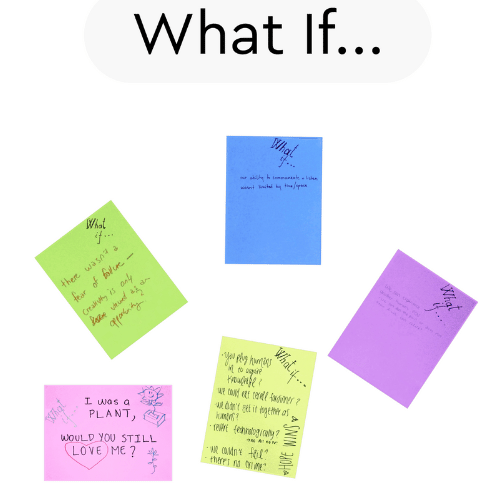
After the hope cards, we imagined futures together creating What If posters to build a space that allows Future(s) to be sensed, seen…
what if

Resources: 

Hope Cards

ttps://www.sitra.fi/en/topics/weak-signals/#weak-signals-2022 (you can create your own hope cards based on your context of bioregionalism) 

Create alternative futures with “what if…”

– Here is one example from Helsinki  Design Museum material for teachers https://www.designmuseum.fi/wp-content/uploads/2020/04/Task-material-for-teachers_What-if-Alternative-Futures.pdf 

– Here for students https://www.designmuseum.fi/wp-content/uploads/2020/04/Task-A-a-school-day-in-2050_print.pdf
Naviguer vers un Avenir Durable avec nos Jeunes Citoyens

Naviguer vers un Avenir Durable avec nos Jeunes Citoyens

Par Nadège Boukhemma et Caroline Gomez, Lycée Bel Orme

Top départ vers le chemin de l’audience !

{

Vers un objectif inclusif, interconnecté, et tellement universel

Nous sommes Caroline et Nadège, durablement engagées dans ce projet de sensibilisation et d’engagement de nos jeunes en devenir, vers la construction d’un monde meilleur, prospère, où personne n’est mis de côté.

Un monde qu’ils continueront à construire ensemble, qu’ils consolideront à la force de leurs connaissances, constats, réflexions, de leurs actions et cheminement vers un objectif inclusif, interconnecté, et tellement universel.

« ODDIENCE  2030 » notre projet collaboratif ! Cela sonne tel un rendez-vous solennel avec notre planète. Que faire avec nos jeunes responsables de demain ? comment arriver à ce rendez-vous, fiers de nos jeunes éco citoyens conscients des enjeux planétaires, capables de penser, d’agir, de construire, individuellement, collectivement leur après ?!

Entrevoir des outils que nous pourrions utiliser

Le lancement du projet à Bordeaux a permis la pose de notre première brique de l’édifice modeste à l’échelle planétaire que nous souhaitons construire avec nos partenaires, co -constructeurs de cette jeunesse compétente du 21 siècle.

Nous commençons donc cette longue traversée réflexive, cherchant chacun de notre côté comment intégrer, sensibiliser à la problématique mondiale de la protection de notre planète, agissant en faveur de tous les êtres humains afin qu’ils vivent en paix et dans la prospérité.

Commencent donc nos interrogations, la bascule vers des zones d’inconfort pour chacun, tamponnée par nos mutualisations, nos échanges, notre force à a plusieurs, un ciment à notre édifice en construction !

Nos sorties organisées par Terre et Océans au cœur de la nature simplement elle-même, nos ateliers d’échanges réflexifs, de prise de parole, d’improvisation avec le RADSI, nous ont permis d’entrevoir des outils que nous pourrions utiliser pour engager nos jeunes, les sensibiliser à des problématiques réelles, faire d’eux des acteurs durablement responsables, chacun selon nos enseignements et nos compétences !

Tel Archimède dans son bain, quelques ampoules s’allument : EURÊKA ! nous nous projetons, c’est le début de la traversée

Caroline et moi-même embarquées sur ce bateau vers le port de l’ODDIENCE 2030, cherchons, réfléchissons et tel Archimède dans son bain, quelques ampoules s’allument : EURÊKA ! nous nous projetons, c’est le début de la traversée réelle…

ODD 6

ODD6

Garantir l’accès de tous à l’eau et à l’assainissement et assurer une gestion durable des ressources en eau.

© agenda-2030.fr

Un des premiers ODD sur lequel nous souhaiterions travailler avec nos élèves étant l’ODD 6 « Accès à l’eau salubre et l’assainissement et assurer une gestion durable des ressources en eau » : nous pensons travailler cet ODD dans le cadre de l’enseignement de la Prévention Santé Environnement ou encore de l’enseignement de la consommation alimentaire responsable.

  • D’abord avec une approche de la problématique de l’inégalité de la disponibilité des ressources en eau douce au niveau local et planétaire et l’inégalité d’accès à l’eau potable des populations à travers le monde. Nous le pensons par le biais d’un travail de questionnement, de recherches, de visites…
  • Connaître le cycle de la potabilisation de l’eau, du traitement des eaux usées et l’impact humain sur la pollution des eaux : visite de sites d’épuration des eaux usées, quelle dimension durable en faveur de 2030, protection des écosystèmes ?
  • Un travail de sensibilisation sur la consommation en eau, mettant en place des débats sur des mesures collectives au niveau local, mondial et des mesures individuelles en tant que consommateur responsable : campagnes de sensibilisation mises en place notamment par les collectivités locales.
  • Dimension de coopération internationale : projet de dessalement de l’eau de mer, quelle avancée ?


ODD 3

Donner aux individus les moyens de vivre une vie saine et promouvoir le bien-être à tous les âges

© agenda-2030.fr

ODD 3

L’ODD 3 « Donner aux individus les moyens de vivre une vie saine et promouvoir le bien être des personnes âgées » est également apparu comme une évidence.

Les jeunes sont amenés à évoluer dans un monde riche de partage et d’entraide. Les personnes âgées sont au cœur de leur apprentissage. L’engagement des jeunes au niveau local afin de promouvoir le bien être des personnes âgées notamment avec nos EHPAD voisins, sera mis en avant par le biais d’actions ponctuelles mais aussi hebdomadaire afin de faciliter la communication et la mise en projet. La prise en compte du bien-être de son « voisin » est un engagement du quotidien que nous souhaitons développer.

Nous voilà engagées et prêtes à nous former pour accompagner nos jeunes et les amener à devenir des acteurs, des citoyens engagés pour la préservation de notre planète et de ses habitants.

Breathtaking moment in the dune of Pilat

Breathtaking moment in the dune of Pilat

By Maria Ascensão Marrachinho, Agrupamento de Escolas de Albufeira

Breathtaking moment in the dune of Pilat

{

A breathtaking moment

It was within the scope of the ODDdience  2030 Project, an Erasmus+ KA2 Programme, which took place between the 13th and 17th of November 2023, in Bordeaux, France, that we experienced a breathtaking moment in the dune of Pilat.

The Portuguese team from the Albufeira School Cluster was formed by Ilena Gonçalves (Director of the School Cluster), Maria Ascensão Marrachinho (Project Coordinator of the School Cluster), Naseema Saiyad (Coordinator of the ODDience project), and Daniel Vaqueiro (Coordinator of the subject of Citizenship).

During the mobility week we had the opportunity to carry out several activities on the SDGs and the 21st century skills, to participate in teacher training, as well as visiting Île Nouvelle in Garone and the Pilat Dune.

pilat observation
pilat
Agrupamento de Escolas de Albufeira team

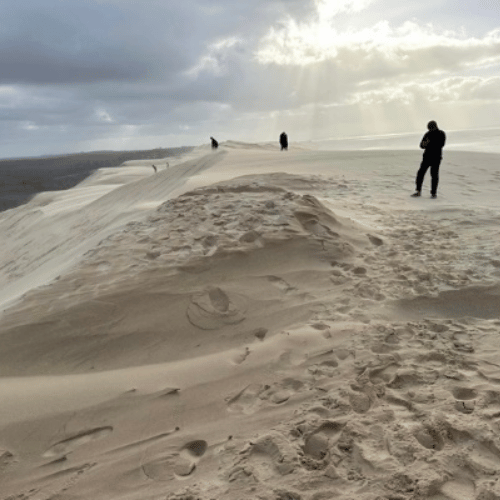
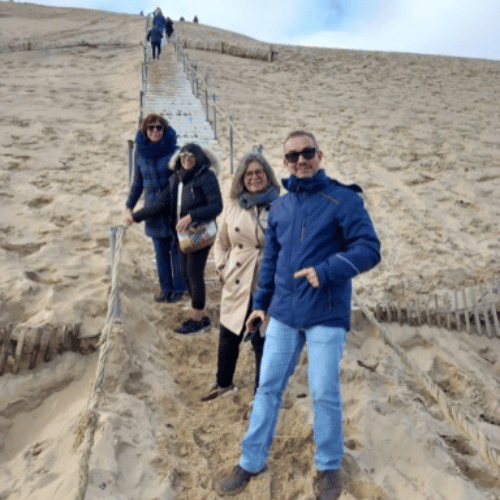
Climbing the 100m of the dune was a real challenge

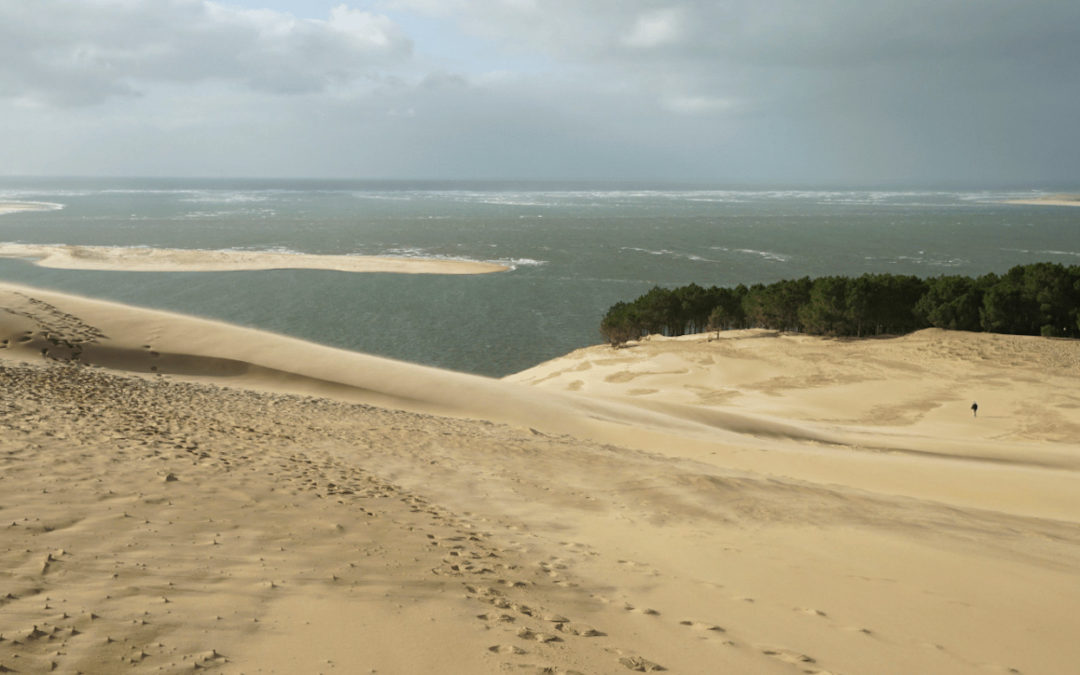
We would like to highlight the visit to the dune of Pilat, the tallest sand dune in Europe, located in the Arcachon Bay area, with its forest-dune-ocean landscape that we greatly appreciated.

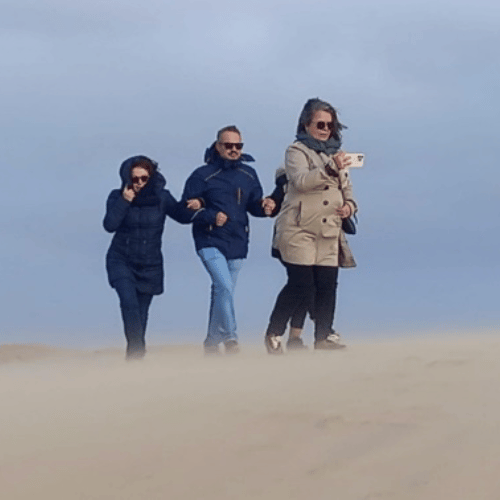
Climbing the 100m of the dune was a real challenge for all of us, quite radical, having been a real fight against the wind making the moment unique and unlike any we’ve ever experienced.

The visit was guided by the project’s partner, the association “Terre et Océan” and made us understand the importance of this area, its exceptional extension, associated to its 40 centuries of history.

The Pilat dune also stands out for its exceptional beauty and diversity of its natural environment. The Pilat dune is located between the ocean and the forest, we learned that it moves 1 to 5 m per year to the east, under the influence of prevailing winds and tides.

Unique

Although we have dunes in our region of the Algarve, in Portugal, they are nothing compared to the size and grandeur of this dune that we visited, which makes this place unique and breathtaking.

The crucial role of rivers

The crucial role of rivers

By Beena Nayaken, The Universal School

The Crucial Role of Rivers in Our Lives and Our Responsibility to Safeguard them

{

Garonne River

My love for the rivers made this day all the more special as we were taken on a Cruise for an environment experience from Bordeaux to Ile Nouvelle.

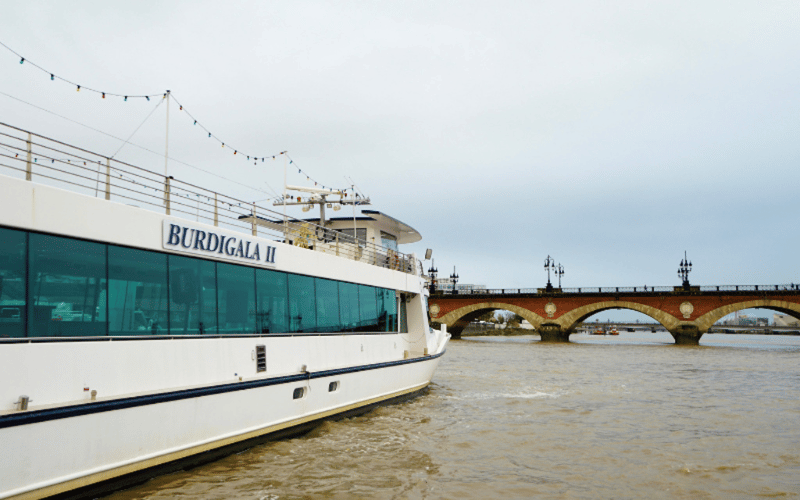
Water and plankton samples from the Burdigala pontoon were collected and with immense excitement I boarded the Burdigala boat right from the bank of the Garonne.

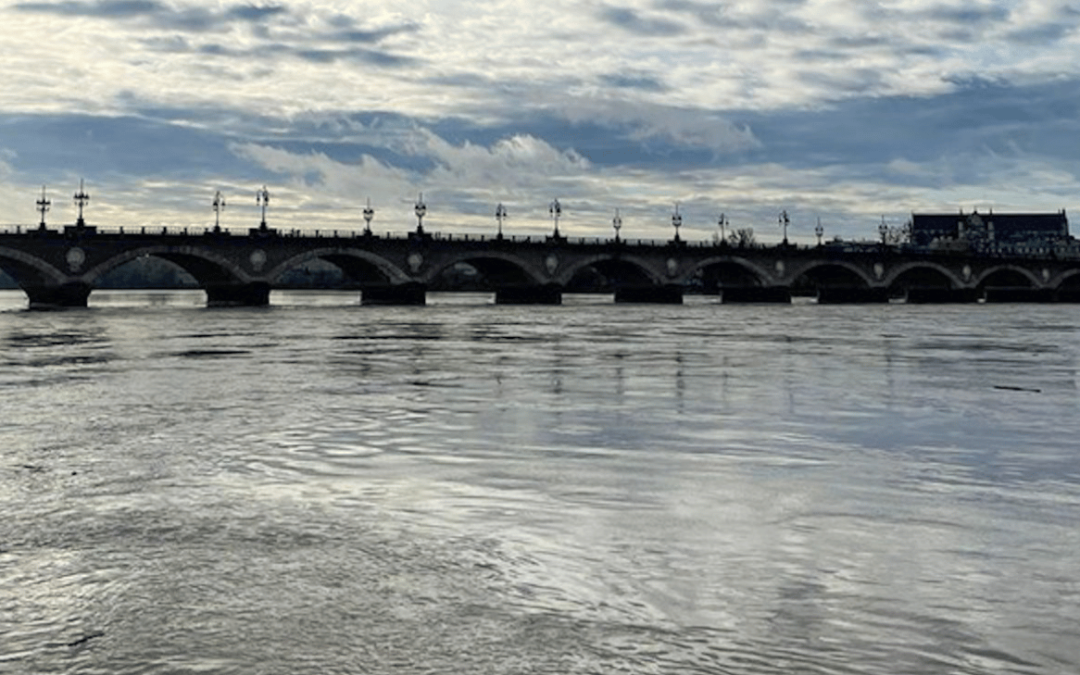
We navigated from Bordeaux to Ile Nouvelle with interactive workshops. Entire day we were engaged in activities which revolved around the Garonne river. We learnt about the history of the river, its course, estuaries, and the impact of floods.

Through experiential learning the impact of rivers in our lives and how we can work towards safeguarding them for the future generations was imbibed.

bateau de croisiere burdigala 2

Rivers are the lifeblood of our planet, weaving their way through landscapes and connecting diverse ecosystems.

They have played a central role in human civilizations throughout history. Ancient civilizations flourished along the banks of rivers harnessing the fertile soil and abundant water for agriculture.Their importance in sustaining life cannot be overstated, as they play a pivotal role in providing water, supporting biodiversity, and fostering human civilizations. It is our collective responsibility to recognize the significance of rivers and actively work towards safeguarding these vital natural resources. This thought resonated and made a lasting impression on my mind.

I realised that as stewards of the planet, we need to take the responsibility to adopt sustainable practices, enforce regulations, and invest in conservation efforts to protect our rivers. By promoting sustainable practices, enforcing environmental regulations, and fostering a global commitment to river conservation, we can ensure that these vital ecosystems continue to thrive for generations to come.

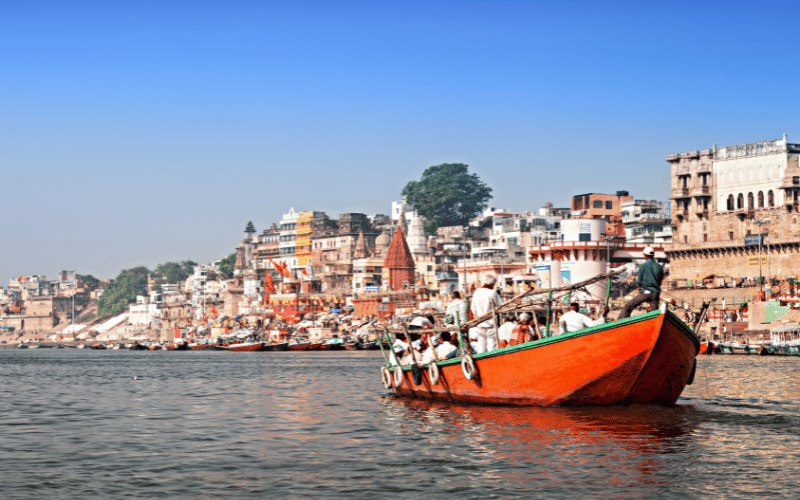
One of the most notable achievements in India has been the Ganga rejuvenation project also called Namami Gange. The entire community and NGOs joined hands together for this project. The project has brought about substantial enhancement in the river’s water quality, accompanied by the rehabilitation of previously polluted sections.

rejuvenating the ganga

Students can play a vital role in creating awareness for river rejuvenation projects by joining hands with the civic authorities.

Save human kind and the planet

Save human kind and the planet

By Nina Tervala, Vaskivuoren lukio

The climat is changing rapidly which has an impact on everything that lives

{

I didn’t have a too clear of an idea about the project

We came from Finland, Vantaa to Bordeaux not knowing anybody.

We had spoken on-line a few times and I had been invited to the project not long ago, so I didn’t have a too clear of an idea about the project and how it is going to work.

During the kick-off week we got to know each other much better. Through varied activities we saw different sides of others and no doubt showed many details of ourselves.

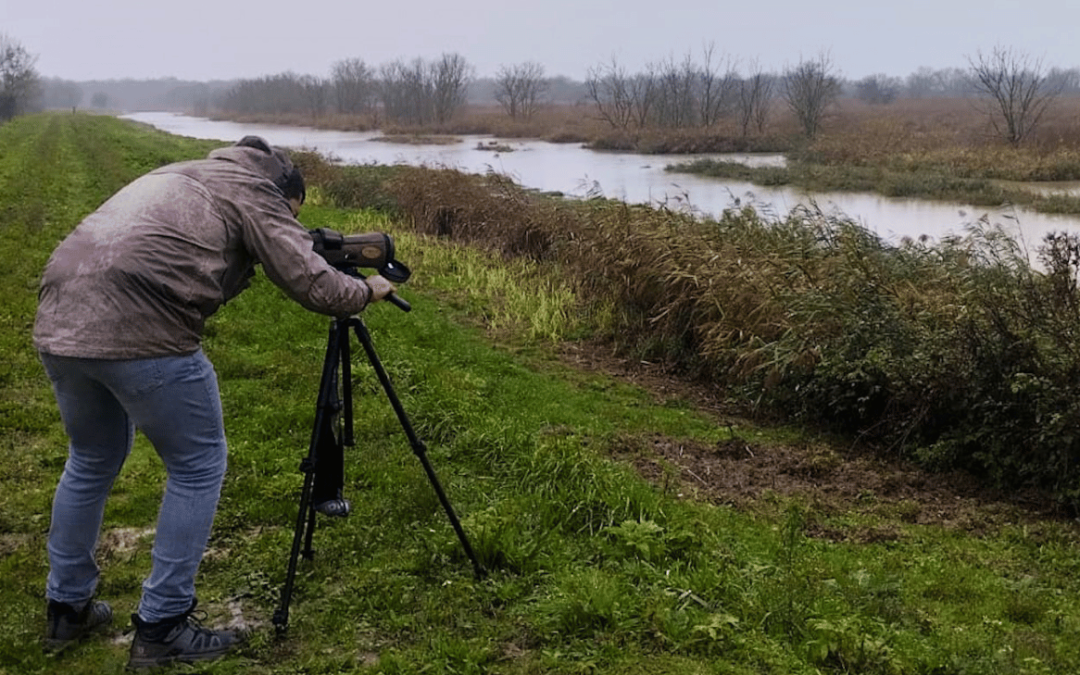
We went to see places, on river Garonne and dune du Pilat. We did activities, gathering and examining samples from the water, improvisation, speaking, problem solving in an escape game. At the same time we learned about the environment and the situation of the globe and people on this globe.

So I understood that I am taking part of an Erasmus project with an object to save human kind and the planet.

Very humble. And this is why I am excited and looking forward to our next steps.

The people have brought our planet into the situation where it currently is – the climat is changing rapidly which has an impact on everything that lives. We need to start doing things very differently. There are millions and millions of people who need to understand the urgency right now.

The challenge lies in the difficulty of making a deep impact on other people’s ways of thinking and acting. Changing our and others’ values. The task is enormous. Should we do something big as human kind, us billions  on all five continents, the rich and the poor? That would not be possible, and it would not work. Instead there should be done lots of small things on community levels, on individual levels. The idea of numerous individual deeds in the right direction sounds doable and comprehensible. It gives hope, I can do something. I can speak to others and I can be an example.

Workshop

On one workshop we did improvisation.

We started from our names and presented ourselves with our name and a gesture, then we called each other with the name and gesture, we trusted each other, closed our eyes and were led through the room by the other, we invented new professions and spoke for them, we wrote poems and read them to others using different voices and energies. We made different impacts on others using not just words but our bodies and our energy.

What I learned from this workshop was that words are not enough. The words need to be heard and they need to have an impact on the listener. They need to be true, credible, important. Scientists often trust in facts and hope that the truth will be seen anyway. Sadly that is not the case.

People hear what they want to hear, that we know. Our message should not be from doom’s day telling that all is lost. Because it isn’t, we can do things differently. Now we need to learn to use our voice and start changing things. Us teachers need to give tools to our students for them to learn how to think and act for their future.

People will remember and understand things that are worth noticing and that awake emotions. This needs to be remembered when we try to make a change for the better, for the sake of our planet.